
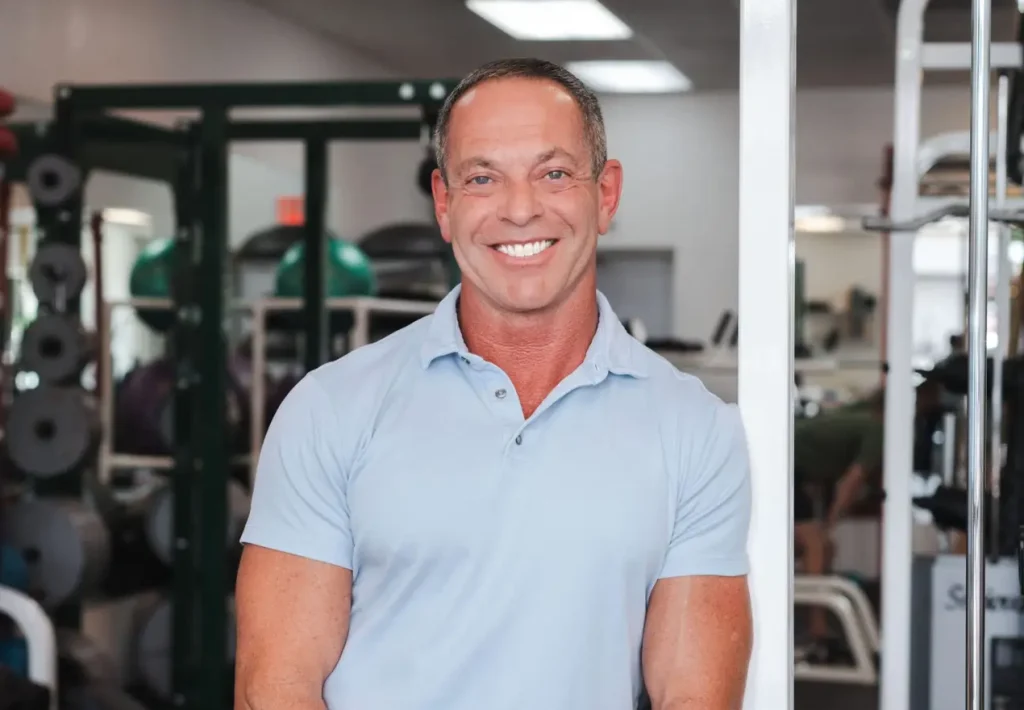
Quick answer: Personalized personal training for seniors means the plan is built around you, not a package you have to fit into. With Paul Fischer in Reno, that covers what you train, how often you meet, what you do at home between sessions and how quickly you progress. All of it is based on an individual assessment of your body, your health history, your goals and your schedule.
Key takeaways
- Two 70-year-olds can need completely different programs. Age alone tells a trainer very little.
- Paul Fischer starts every client with an individual assessment before deciding what, or how often, to train.
- Some clients train several times a week, some once. There’s no required schedule.
- Many clients get personalized at-home exercises, like balance drills or chair sit-to-stands, so they keep moving between sessions.
- The plan is reviewed and adjusted as you get stronger, or when life, health or goals change.
Why one-size-fits-all programs don’t work after 60
By 60, 70 or 80, people differ far more than they did at 25.One person runs half-marathons; another is recovering from a hip replacement. One has osteoporosis; another has a disc issue that flares when they bend. A generic class or app program can’t account for any of that, and not every personal trainer can, either.
The research agrees. The National Strength and Conditioning Association’s position statement on resistance training for older adults says programs should follow the principles of individualization and progression, and that each person’s needs should be assessed before training begins.It also notes programs can be adapted for people with frailty, mobility limits or chronic conditions.
That’s the approach Paul Fischer in Reno has taken for roughly 30 years. The “personal” in personal training isn’t a slogan. It’s the starting point for every decision.
What Paul Fischer looks at before building your plan
Every new client starts with an individual assessment at Performance EDU in Reno. Paul Fischer draws on his ACE certification, CHEK IMS Level 3 training and background as a physical therapy aide to look at:
- Your health history: joint replacements, osteoporosis, arthritis, back or disc issues, past surgeries and anything your doctor is monitoring
- How you move: strength, balance, mobility and the movements that feel difficult or painful
- Your goals: lifting grandkids, traveling, skiing, golfing, getting up off the floor with confidence, or simply feeling stronger
- Your experience: whether you’re new to strength training, returning after years away or already training regularly
- Your schedule: how much time you realistically have, now and over the next few months
The last point matters more than most people expect. A plan that looks perfect on paper but doesn’t fit your calendar won’t last.
How often you train: the schedule fits you
There’s no required number of sessions. Paul Fischer recommends a structure based on your assessment, then works with you to find one you can keep. For example:
- Several sessions a week for someone with an ambitious goal, like a big trip or ski season, who wants close guidance
- One session a week plus at-home exercises for someone with limited time, or who already stays active and wants expert direction
- An extra-supportive start for someone returning after surgery or a long break, with more check-ins early on
- Shared sessions for couples who want to train together, or separate sessions if that suits them better
These aren’t packages. They’re examples of how differently the same trainer can work with different people. The NSCA recommends strength training each muscle group two to three non-consecutive days a week, and sessions plus at-home work are how many of Paul’s clients build toward that, at a pace their body can handle.
Between sessions: personalized at-home exercises
For many clients, Paul Fischer assigns “homework”: a short set of exercises that are safe to do at home and chosen for that person. Depending on your needs, that might include:
- Balance drills, like a supported single-leg stand at the kitchen counter
- Chair sit-to-stands to build leg strength for everyday tasks
- Mobility work for stiff hips, shoulders or a cranky back
- Light band or dumbbell exercises if you have equipment at home
The difference from a generic routine is that every exercise was picked after Paul watched you move.He knows which movements you can do safely, which to modify and which to skip for now. The result: even clients who come in once a week are moving nearly every day.
If you already have a home setup but aren’t sure what to do with it, this is where a trainer helps most.Paul can build a routine around the equipment you already own.
How the plan changes as you do
A personalized plan isn’t set once and forgotten. Paul Fischer adjusts it when:
- You get stronger. Weights, exercises and difficulty progress as your body adapts, the way the NSCA’s progression principle describes.
- Your health changes. A new diagnosis, a flare-up or an upcoming surgery means the plan shifts around it.
- Your schedule changes. Busy for six months? Train less often with more homework, then build back up.
- Your goals change. Getting ready for ski season looks different from preparing for a long trip or simply staying independent.
That flexibility is a big reason many of Paul’s clients stay with him for years. The plan grows with them. (One client has trained with Paul for 15 years; read her story.)
Start with a plan built for you
You don’t need to know what you need before you call. That’s what the assessment is for. Get in touch with Paul Fischer to schedule yours at Performance EDU in Reno, and leave with a plan that fits your body, your goals and your life.
It means your program is built from an individual assessment of your health history, movement, goals and schedule. With Paul Fischer, that shapes what you train, how often you meet, what you do at home and how quickly you progress.
It can be, especially when paired with personalized exercises to do at home. Whether it’s right for you depends on your goals and starting point, which is what the assessment determines.
Yes. Many of Paul Fischer’s clients get at-home exercises, such as balance drills and chair sit-to-stands, chosen for their body and safe to do between sessions.
In most cases, yes. Paul has about 30 years of experience working with older adults with joint replacements, arthritis, osteoporosis and back issues. Check with your doctor first if a condition is being actively treated.