
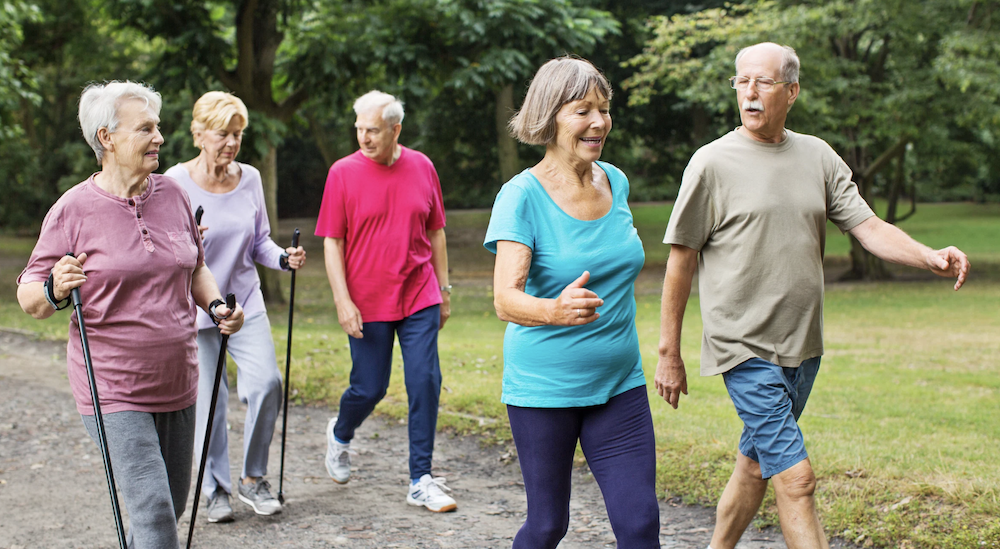
“I walk every day” is one of the most common things Reno personal trainer Paul Fischer hears from new clients in their 60s and 70s — usually said with a bit of pride, and rightly so. Walking is genuinely good for cardiovascular health, and consistency matters more than most exercise. But walking alone doesn’t address the two things that determine whether someone stays independent as they age: muscle strength and balance.And by the time that gap shows up as a problem, it’s usually because of a fall.
The Part Walking Doesn’t Fix
Starting in a person’s 30s, the body begins a slow, largely invisible process called sarcopenia — the age-related loss of muscle mass and strength. It accelerates after 60, and walking, while great for the heart, does very little to slow it down. Walking is a low-load activity; it doesn’t create enough resistance to signal the body to build or preserve muscle the way strength training does.
The result is a common pattern: someone who feels generally healthy and active, walking regularly, who’s still losing strength and stability underneath that routine without realizing it — until a simple task like standing up from a low chair or a car suddenly feels harder than it used to.
Why Balance Needs Its Own Training
Balance isn’t just “not falling down.” It’s a trained skill involving strength, coordination, and reaction time, and like any skill, it deteriorates without specific practice.Walking on flat, predictable ground doesn’t challenge balance the way real life does — uneven sidewalks, stepping off a curb, reaching for something on a high shelf.
This matters because the numbers are significant. The CDC reports that roughly 1 in 4 adults over 65 experiences a fall every year, and falls are the leading cause of injury in that age group.Targeted balance and strength work is one of the most effective ways to reduce that risk — not by avoiding challenge, but by deliberately building the body’s capacity to handle it.
Paul sees this play out often in early sessions with new clients. People who consider themselves in good health — walking regularly, feeling generally fit — are frequently surprised at how much effort it takes to balance on one leg, or move smoothly from sitting to standing. It’s not a sign they’re out of shape. It’s a sign that walking, on its own, was never going to train that particular capability.
What Actually Closes the Gap
The most effective approach for adults over 65 combines three things walking doesn’t provide on its own:
- Strength training — using resistance to preserve and rebuild muscle mass, which directly supports everyday movements like standing, climbing stairs, and carrying groceries.
- Balance-specific exercises — single-leg work, controlled transitions between sitting and standing, and movements that challenge stability in a safe, supervised setting.
- Corrective and functional exercise — addressing the specific imbalances, old injuries, or movement patterns unique to that person’s body, rather than a generic routine.
This is the core of how Paul trains clients in Reno,drawing on close to three decades of experience and certifications specifically in corrective exercise and functional movement through the CHEK Institute, alongside his ACE personal training credential. It’s not about replacing a daily walk — it’s about adding the two ingredients walking can’t provide on its own.
What Progress Actually Looks Like
Clients typically notice improvements in balance and everyday stability within the first few weeks of consistent training.Meaningful strength gains generally build over six to twelve weeks. The longer-term payoff — meaningfully lower fall risk, easier daily movement, and more energy — compounds over months and years, which is exactly why starting sooner rather than later matters more than most people expect.
Want to know where your strength and balance actually stand? Schedule a free consultation with Paul and find out what your body needs beyond your daily walk.
Frequently Asked Questions
Is walking enough exercise for someone over 65?
Walking supports cardiovascular health but doesn’t provide enough resistance to meaningfully preserve muscle mass or train balance — two of the most important factors in preventing falls and maintaining independence with age.
What exercises should seniors add to their routine besides walking?
Strength training with resistance (bands, light weights, or bodyweight) and balance-specific exercises, such as single-leg stands and controlled sit-to-stand movements, address what walking alone doesn’t.
How common are falls in adults over 65?
About 1 in 4 adults over 65 falls each year, and falls are the leading cause of injury for this age group, according to the CDC.
Is it too late to start strength training later in life?
No. Research shows older adults can build meaningful strength and improve balance at any age when the program is calibrated to their current ability, not a generic routine.