
Most personal trainers are trained to push. Add weight, add reps, add intensity — the standard playbook works fine for a 30-year-old chasing a personal record. It’s the wrong playbook for a 70-year-old rebuilding balance after a hip replacement, or a 65-year-old whose knees haven’t forgiven them for a lifetime of running.
Training older adults isn’t “the same program, lighter weights.” It’s a different discipline — one built around joint health, functional movement, and reading a body’s limits in real time. If you’re vetting a trainer for yourself or a parent, here’s what actually separates someone qualified to do that work from someone who just says they are.
Corrective and Functional Exercise Training — Not Just a Basic Certification
A standard personal training certification teaches someone how to run a workout. It doesn’t teach them how to identify why a client’s shoulder won’t rotate properly,or how to build a program around a bad back instead of around a textbook. That takes specific training in corrective exercise— assessing movement patterns, identifying imbalances, and building a plan that works with a body’s limitations rather than ignoring them.
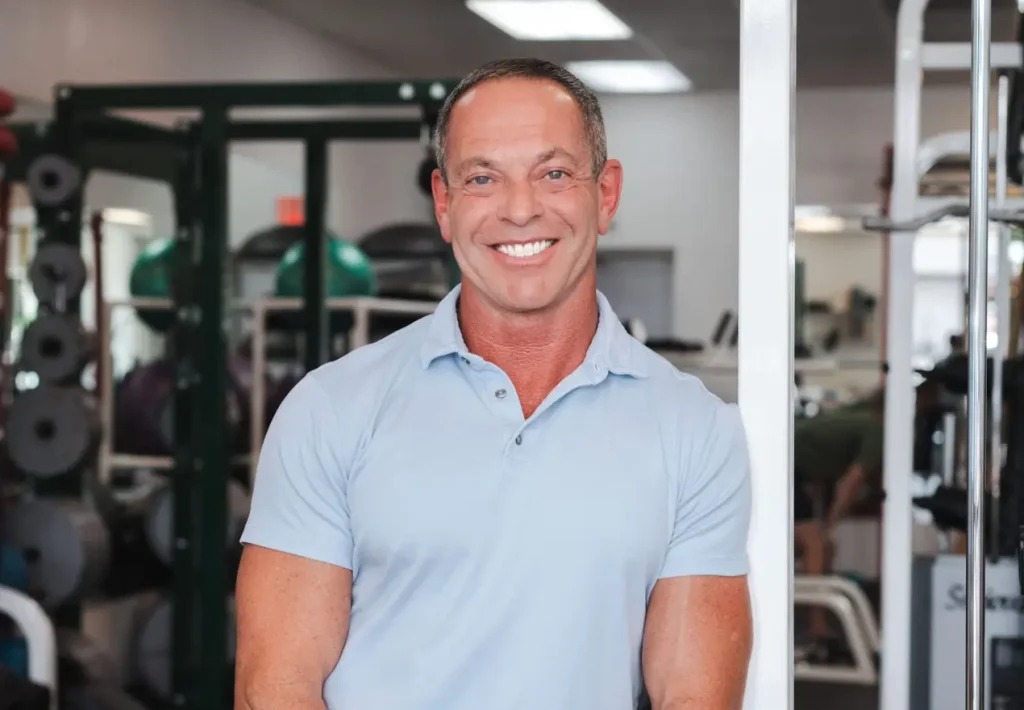
This is the foundation of how Reno trainer Paul Fischer works.Alongside an ACE personal training certification, Paul holds a Level 3 CHEK Institute Integrated Movement Specialist designation and a Level 1 CHEK HLC (Holistic Lifestyle Coaching) certification — both centered on corrective exercise, functional movement, and whole-body wellness rather than generic workout programming. He’s also trained as a physical therapy aide, which shapes how he approaches injury, recovery, and safe progression.
Actual Experience Working with Older Clients
Ask how many years a trainer has specifically worked with clients over 50 or 60 — not how many years they’ve been “in fitness.”Someone who spends most of their time training athletes and bodybuilders may be excellent at that and still be the wrong fit for a client managing arthritis or recovering from a fall.
Paul has been coaching clients in Reno for close to three decades, and fitness over 40 — including strength training, back care, and corrective exercise for older adults — has been a defined specialty for most of that time, not a side offering.
A Program That Adjusts Session to Session
Older bodies don’t respond the same way week to week. Sleep, joint inflammation, stress, and life in general all affect how much a client can safely do on a given day. A trainer who runs the same script regardless of how a client shows up isn’t paying attention — and isn’t equipped to keep a client both safe and progressing.
Watching for those signals and adjusting in real time isn’t optional in this work — it’s the job. It’s part of why clients often build steadier trust in their program over time instead of hitting plateaus or setbacks.
Credibility Beyond the Gym Floor
Formal recognition isn’t the whole picture, but it’s a useful signal that someone’s expertise extends beyond their own client base.Trainers who are asked to speak, write, or consult are generally trainers whose peers and local health institutions already trust their judgment.
Paul has spoken to the Reno chapter of the Association of Perioperative Registered Nurses and at the Nevada Health Forum, worked with patients of the Western Bariatric Institute, and been featured as a fitness expert on News Channel 4 and in publications including the Reno News & Review and Fairways & Greens Golf.
A Trainer Who Treats the First Conversation Like It Matters
The best sign of how a trainer will treat a client long-term is how they handle the very first interaction. A rushed sales pitch on the phone tends to predict a rushed, one-size-fits-all program later. A trainer who listens first — asking about goals, health history, and concerns before ever talking about a plan — is usually the one who keeps listening once training starts.
What This Looks Like in Practice
Paul currently trains clients through Performance EDU here in Reno, after closing his own studio, Framework Personal Training, following 27 years in business. The approach hasn’t changed: strength training, nutrition guidance, and corrective and functional exercise, built around each client’s actual body rather than a standard template. It’s an approach particularly suited to adults 50 and older who want to stay strong, steady, and independent — not just “in shape” for its own sake.
Curious whether this approach is the right fit for you or a family member? Schedule a free consultation with Paul today to talk through your goals.
Frequently Asked Questions
What certifications should a senior fitness trainer have?
Look beyond a basic personal training certification for credentials in corrective exercise or functional movement, such as a CHEK Institute certification, and ideally experience or training related to physical therapy or injury recovery.
Is a personal trainer worth it for someone in their 70s?
Yes, particularly for building strength and balance safely. Research consistently shows older adults can make meaningful strength and balance gains at any age, provided the program is calibrated to their current ability rather than a generic routine.
How is training for seniors different from a regular personal training program?
It places more emphasis on joint health, balance, and functional movement — the ability to sit, stand, bend, and move safely in daily life — rather than maximizing weight lifted or calories burned.
How do I know if a trainer has real experience with older clients?
Ask directly how many years they’ve specialized in this age group, request references, and ask how they’d adjust a session if a client showed up fatigued or in pain. Their answer will tell you a lot.